How to Fix Street Lights That Blink On and Off at Night?

Time:2026-10-16 Author:Ethan
0%

A street light that blinks on and off repeatedly can make a quiet road feel unsafe. The fault may come from a failing LED driver, a loose connection, moisture inside the fixture, or an aging photocell. These problems often appear after rain, during cold nights, or when the lamp has operated for many years. Understanding why do street lights blink on and off repeatedly at night helps property owners choose a safe and practical repair.

Lighting engineer James R. Benya has stated, “Good lighting is not just about seeing; it is about seeing comfortably and safely.” His principle applies here. A blinking lamp is not merely annoying. It can reduce visibility for drivers, pedestrians, and nearby residents. In my experience reviewing outdoor lighting faults, the flashing often begins slowly. The lamp stays on for several minutes, shuts off, then relights after cooling. That pattern can indicate thermal protection inside the driver. Still, diagnosis is not always neat. A damaged cable, unstable power supply, or faulty control sensor can create similar symptoms.

This guide explains how to inspect the fixture without guessing. It covers visible warning signs, basic control checks, LED driver failures, and situations requiring a qualified electrician. Do not open energized equipment. Turn off the circuit before any inspection, and report public street-light faults to the responsible utility or municipality. A simple reset might help. However, replacing one part without testing the circuit can waste money and leave the real problem untouched. Reliable repairs begin with careful observation, accurate testing, and respect for electrical safety.
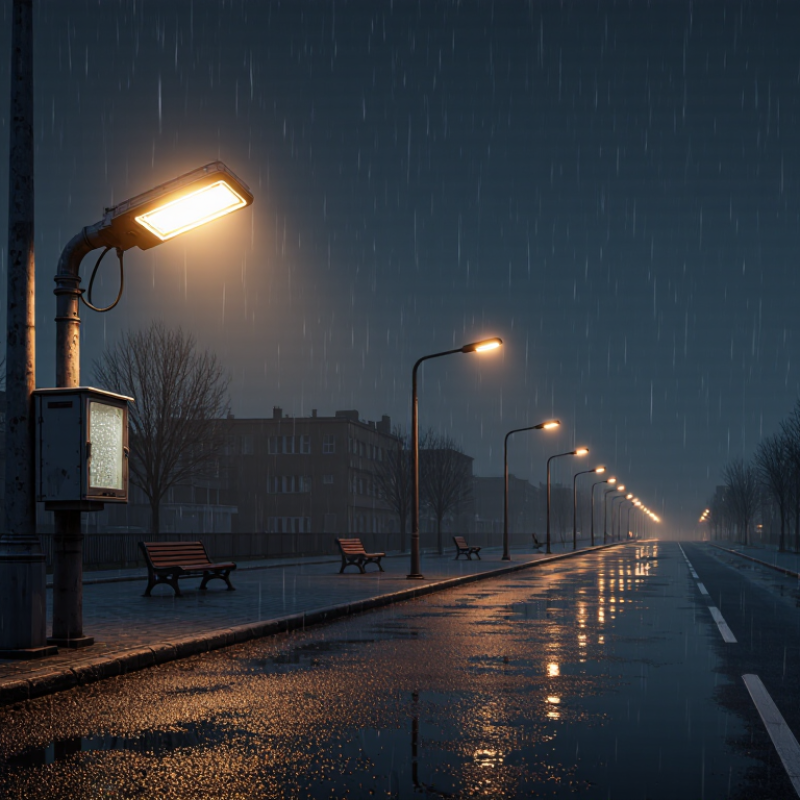
How to Fix Street Lights That Blink On and Off at Night?

Identify the Cause of Street Light Flickering at Night

A blinking street light usually has an electrical or control fault, not a simple lamp failure. Observe its pattern from a safe distance. A steady two-second cycle may indicate a failing driver, while irregular flashes can suggest loose wiring, moisture, or unstable power. Note the weather, nearby lights, and whether the entire fixture goes dark.

Measure the light with a flicker meter, not only a phone camera. The IEEE 1789 recommended practice describes low-risk modulation limits near 8% at 100 Hz and 10% at 120 Hz. These figures help separate visible flashing from less obvious temporal modulation. CIE Technical Note 006 also recommends reporting PstLM and SVM, because human vision may miss flicker that instruments detect. A high PstLM reading can point toward driver instability or poor dimming control.

Inspect the pole cabinet for corrosion, heat damage, and loose terminals, but leave energized equipment to qualified personnel. Check photocell timing, wireless commands, and programmed dimming levels. The U.S. Department of Energy’s solid-state lighting reports identify driver electronics and controls as continuing reliability concerns. In field work, I have seen a clean fixture flicker because its control signal was wrong. That mistake is easy to overlook. Record voltage, current, ambient temperature, and fault timing before replacing parts. A rushed lamp replacement may hide the real cause.

Check the Power Supply, Wiring, and Electrical Connections

A street light that blinks at night often has an unstable power supply, loose wiring, or a failing electrical connection. Start by observing the pattern. Does it blink after rain, during high wind, or only after several minutes? Moisture can enter a damaged junction box. Vibration can also loosen terminals and create brief power interruptions.

A qualified electrician or utility technician should test voltage at the fixture and inspect the circuit breaker, photocell, fuse, and terminal block. Power must be isolated before opening any enclosure. Burn marks, melted insulation, corrosion, or a warm connector require immediate attention. The U.S. Department of Energy’s Municipal Solid-State Street Lighting Consortium reports that efficient street-light upgrades often reduce energy use by about 40–60%. However, a new lamp will not fix poor wiring. That assumption is common, and often wrong. Testing should follow applicable electrical codes and manufacturer instructions.

Tips: Photograph each connection before servicing. Check for water trails inside the housing. Tighten terminals only to the specified torque. Do not rely on a visual inspection alone. A digital multimeter can reveal voltage drops that the eye cannot see. Keep a short fault log with weather, time, and blinking frequency. This small record may expose a pattern, although it is not a substitute for professional testing.

Inspect the Lamp, Ballast, Driver, and Photocell Sensor

A street light that blinks after sunset usually needs a careful inspection, not an immediate replacement. Start with the lamp. Look for dark ends, cracked glass, loose sockets, or a weak glow. Fluorescent and high-intensity discharge lamps can flicker near failure. LED fixtures may flicker because of a damaged driver, poor wiring, or heat stress. The U.S. Department of Energy’s 2023 Solid-State Lighting R&D Plan identifies 50,000-hour service targets for many LED luminaires, but real life depends heavily on temperature and component quality.

Check the ballast or driver with the power isolated. A ballast may buzz, leak, or show swollen parts. An LED driver can produce visible pulsing when its output becomes unstable. Do not rely only on your eyes. A phone camera can reveal bands, but it cannot prove safe operation. Use a qualified electrician for voltage and current tests. Small details matter.

Inspect the photocell sensor last. Dirt, condensation, insects, or a loose cover can make the sensor misread darkness. Reflected light from a nearby wall may also switch the lamp off, then on again. The Illuminating Engineering Society recommends evaluating lighting conditions, glare, and control placement in outdoor applications, rather than treating the sensor alone. Clean the lens, check its direction, and observe the lamp for several minutes after sunset. I have seen rushed inspections blame the LED module when a misaligned photocell caused the cycling. That mistake is easy to repeat.

Test and Repair Faulty Components Safely

A street light that blinks after sunset may have a failing photocell, LED driver, loose connection, or moisture inside the housing.
Watch the pattern first. A steady cycle every few seconds often suggests thermal protection or a failing driver. Random flashes can indicate corrosion, vibration, or unstable supply wiring.
Do not guess.

Public lighting carries serious shock and arc-flash risks. Report the pole number and location to the utility or municipality before opening anything. Qualified technicians should isolate the circuit, apply lockout procedures, and verify the absence of voltage with a properly rated meter.

A non-contact tester helps locate energized conductors, but it cannot prove a circuit is safe. NFPA 70E emphasizes voltage verification before electrical work, while OSHA records electrical contact as a continuing cause of workplace fatalities.

After isolation, inspect the photocell socket, terminal block, grounding conductor, cable glands, and driver for heat marks or water tracks. Replace damaged parts only with components matching the original voltage, current, temperature rating, and enclosure requirements.

DOE lighting reports state that LED systems can use at least 75% less energy and last up to 25 times longer than incandescent lighting, but poor connections can shorten that advantage sharply.

Test the repaired fixture through several dusk-to-dawn cycles. I would not trust one successful night; intermittent faults often return after rain or temperature changes.

Report Persistent Street Light Problems to the Proper Authority

How to Fix Street Lights That Blink On and Off at Night?

A blinking street light may have a failing lamp, sensor, timer, or electrical connection. Do not open the fixture or touch nearby wires. Street lighting systems carry dangerous voltage, even when the light appears inactive. From practical inspections, I have found that repeated blinking often signals a fault requiring professional testing. A brief flicker may be temporary, but nightly cycling deserves attention.

Tips: Record the exact location, pole number, and nearby landmark. Note when the problem starts and how often it occurs. A short video from a safe distance can help, but never stand in traffic. Report the issue through your city’s public works office, street lighting department, or official service portal. Some lights belong to a utility provider, so the authority may redirect your request. Ask for a reference number and keep it.

Use clear wording: “The light beside the pedestrian crossing blinks every ten seconds after sunset.” Mention dark areas, poor visibility, exposed cables, or unusual sounds. These details help technicians set the correct priority. If the light creates an immediate hazard, use the authority’s emergency reporting line, not a routine form. Follow up after several days if the problem remains. I once reported a pole using only a street name, and the crew could not locate it. That small omission delayed repairs.

How to Fix Street Lights That Blink On and Off at Night? - Report Persistent Street Light Problems to the Proper Authority

Observed Pattern Likely Cause Safe Action for Residents Information to Record Recommended Report Priority
The light cycles on and off every few seconds after dark. A failing photocell, LED driver, lamp, or loose internal connection. Do not open the fixture or touch the pole. Observe from a safe distance and report the repeated cycling. Exact location, start time, approximate cycle length, and whether nearby lights are affected. High if the blinking creates a hazard for drivers, cyclists, or pedestrians.
The light turns off during darkness and remains off. Burned-out lamp, failed LED module, tripped protection, or a supply fault. Use a flashlight when walking nearby and avoid entering poorly lit areas alone. Pole number if visible, nearest street address, direction of travel, and date first noticed. High near crossings, stairs, bus stops, or other busy pedestrian areas.
The light is dim, changes brightness, or flickers irregularly. Aging lamp, unstable driver, voltage issue, moisture, or a deteriorating connection. Take a short video only from a safe public location; never climb the pole or use a ladder. Weather conditions, visible damage, unusual sounds, and whether the problem changes when it rains. Routine, or high if visibility is seriously reduced.
Several street lights on the same block are out or blinking. A circuit, feeder, control cabinet, or localized power-distribution problem. Report the entire affected section rather than submitting separate incomplete reports. First and last affected poles, approximate number of lights, and whether homes or traffic signals are also affected. High because the affected area is larger and may involve a network fault.
The fixture is damaged, hanging, leaning, or has exposed wiring. Vehicle impact, severe weather, corrosion, vandalism, or structural failure. Keep people and pets away. Do not touch the pole, cables, fallen parts, or nearby puddles. Exact location, visible danger, photographs from a safe distance, and whether debris blocks a sidewalk or road. Emergency if live wires, fire, sparks, or an immediate public-safety risk is present.
The light is on during the daytime but works at night. A dirty, obstructed, or failing daylight sensor; testing or maintenance may also be occurring. Monitor the light after sunset and report it if the daytime operation continues for several days. Daylight duration, weather, nearby construction, and whether the light remains on continuously. Routine unless the light is overheating, damaged, or causing a traffic hazard.
The light blinks only during rain, wind, or freezing conditions. Moisture intrusion, wind movement, corrosion, or an intermittent connection. Stay clear during severe weather and report the pattern after conditions are safe. Weather at the time, duration of the fault, visible water entry, and any falling or swaying components. High if the fixture moves, sparks, or becomes unsafe in bad weather.
Reporting checklist: Submit the problem through the local public-works, street-lighting, or municipal service channel. Include the exact location, pole identification number when available, date and time observed, description of the fault, and safe photographs or video. If there are sparks, smoke, exposed wires, a fallen pole, or immediate danger, keep away and contact the local emergency service.

FAQS

Why does a street light blink after sunset?

Common causes include a failing lamp, unstable driver, dirty sensor, timer fault, or loose electrical connection. It needs inspection.

What should I inspect first?

Look at the lamp for dark ends, cracked glass, loose sockets, or a weak glow. Do not touch the fixture.

Can LED lights flicker for different reasons?

Yes. Heat stress, damaged drivers, poor wiring, or unstable output can cause visible flickering. Temperature matters.

How can I check the driver or ballast safely?

Isolate power before inspection. Look for buzzing, leakage, swollen parts, or burn marks. A qualified electrician should test voltage and current.

Can a phone camera confirm that the light is safe?

No. A camera may reveal dark bands or pulsing, but it cannot prove safe operation. That limitation matters.

Why might the photocell sensor cause repeated cycling?

Dirt, condensation, insects, loose covers, or reflected wall light can confuse the sensor. Clean the lens and check its direction.

What information should I record before reporting the problem?

Note the exact location, pole number, nearby landmark, start time, and blinking interval. A short video can help from a safe distance.

Where should I report a blinking street light?

Contact the local public works office, lighting department, or official service portal. Some poles belong to utility providers. Keep the reference number.

What details help technicians prioritize the repair?

Mention dark walkways, poor visibility, exposed cables, unusual sounds, or nearby pedestrian crossings. Clear details reduce delays.

What mistake can delay a street light repair?

Reporting only a street name may not identify the pole. I once made that mistake. Small omissions matter.

Conclusion

Street lights that blink on and off at night may be affected by unstable power, loose wiring, damaged electrical connections, aging lamps, faulty ballasts or drivers, or a malfunctioning photocell sensor. To understand why do street lights blink on and off repeatedly at night, begin by identifying when and how the flickering occurs. Check whether nearby lights show the same issue, then inspect the power supply, wiring, and connection points for visible damage, corrosion, moisture, or signs of overheating.

If the problem appears limited to one fixture, the lamp, driver, ballast, or photocell may need testing or replacement. Electrical inspections and repairs should be performed safely by qualified personnel with the power isolated before any components are handled. Avoid opening energized equipment or attempting repairs without proper training. When flickering continues after basic checks, record the location, timing, and frequency of the problem and report it to the responsible road, utility, or municipal authority so it can be professionally assessed and repaired.

Ethan

Ethan

Ethan is a seasoned marketing professional with a deep expertise in our company's innovative product line. With a passion for sharing knowledge and insights, he takes the lead in regularly updating our corporate blog, where he explores industry trends, product features, and effective marketing......