Choosing the right fixture for a warehouse, workshop, gym, or retail space affects visibility, energy use, and maintenance costs. Many buyers compare wattage first, but that approach can create uneven lighting and unnecessary glare. The real question is not simply brightness. It is how the fixture distributes light across the working area.
So, what is the difference between high bay and low bay fixtures? High bay fixtures are designed for taller ceilings, commonly above 20 feet, while low bay fixtures suit lower mounting heights. High bays often use narrower beam angles to push light downward. Low bays usually spread light more broadly across nearby surfaces. Ceiling height matters. So does the layout.
A reliable comparison should consider mounting height, lumen output, beam angle, color temperature, glare control, and operating conditions. Photometric reports can show whether light reaches workstations, aisles, or floor-level storage. In a real warehouse, a powerful high bay may still perform poorly if its beam misses the rack faces. That is an easy mistake. A low bay fixture installed too high may also create dim zones and excessive energy consumption.
Professional recommendations should follow recognized lighting practices and manufacturer data, not attractive product claims alone. Check actual lumen maintenance, warranty terms, driver quality, and compatibility with sensors or dimming controls. The best choice may differ between a dusty workshop and a clean distribution center. Some assumptions need testing. A small mock-up installation, measured with a light meter, can reveal problems before a full replacement. This guide explains the practical differences and helps readers make a safer, more efficient lighting decision.
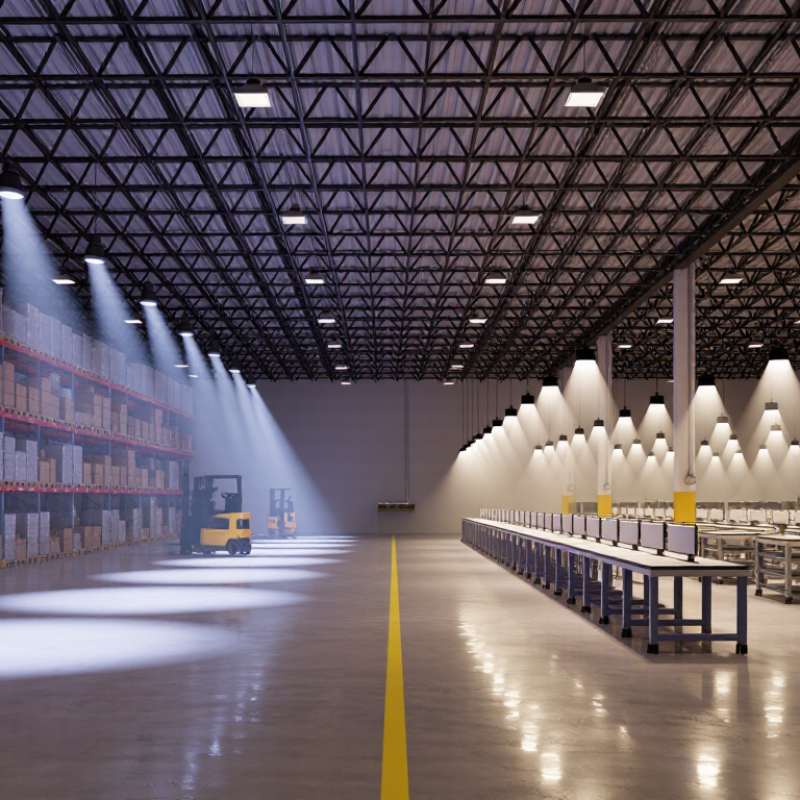
High bay and low bay fixtures are industrial lights designed for different mounting heights and beam needs. A high bay is commonly installed 20 to 40 feet above the floor. It uses focused optics to direct useful light downward. This reduces wasted output near the ceiling. Warehouses, manufacturing halls, and indoor sports spaces often require this approach. High ceilings also demand stable drivers and effective heat management.
A low bay fixture usually serves spaces below about 20 feet. Its beam can be wider because light travels a shorter distance. Workshops, retail back rooms, parking areas, and smaller production rooms may use low bays. The aim is even illumination across work surfaces, aisles, and equipment. Too narrow a beam creates bright spots. Too wide a beam leaves the floor looking dull.
The height rule helps, but it is not perfect. Ceiling color, shelf height, dust, and floor reflectance also affect the choice. A simple height label can mislead. Photometric planning should check spacing, beam angle, glare, and required lux levels. A mechanic needs clear light on metal surfaces, while an aisle needs uniform visibility. Enclosure ratings matter in dusty or damp areas. Controls can reduce energy use, but poor sensor placement may cause annoying switching. Testing one fixture before full installation is often a practical safeguard.
Typical LED low bay fixtures are designed for mounting heights below 20 feet, while high bay fixtures are commonly used at 20–40 feet or higher. High bays generally provide greater lumen output to deliver sufficient illumination across larger and taller spaces. Actual requirements depend on ceiling height, spacing, beam angle, room reflectance, and the target illuminance level.
High bay and low bay fixtures serve different mounting heights, optical needs, and working conditions. Low bay fixtures usually suit ceilings below 20 feet. They spread light across retail areas, workshops, and smaller warehouses. High bay fixtures normally serve spaces from 20 to 45 feet. Their focused optics push usable light toward the floor. A low bay fixture mounted too high can create dim aisles and wasted energy. A high bay fixture mounted too low may cause glare and harsh shadows.
The U.S. Department of Energy reports that LED technology can reduce lighting energy use by roughly 50% to 70% compared with older systems, depending on the application. The International Energy Agency also states that lighting uses about 15% of global electricity. These figures explain why fixture selection matters, but they do not replace a photometric layout. Check mounting height, target illuminance, aisle width, beam angle, and maintenance access. Human comfort matters too. A bright floor is not automatically a good workspace.
Tips: Measure the ceiling before choosing the fixture. For high bays, compare narrow and wide optics. For low bays, control glare near eye level. Request an IES photometric file and review average, minimum, and uniformity values. Do not trust lumen claims alone. Dust, heat, and poor spacing can reduce real performance. The “right” fixture is sometimes less powerful, not brighter. Recheck the design after installation. Forecasts can be wrong. On-site evidence matters.
High bay and low bay fixtures serve different mounting heights. Low bay fixtures usually suit ceilings below 20 feet, or about 6 meters. They work well in workshops, retail areas, garages, and smaller production rooms. Their wider beam can spread light across nearby work surfaces without excessive brightness.
High bay fixtures generally suit mounting heights from 20 to 45 feet, or 6 to 14 meters. Warehouses, aircraft halls, and tall manufacturing spaces often need this stronger optical control. A narrow or medium beam helps deliver useful light to the floor. The fixture must also match aisle width, rack height, ceiling color, and the required task level. Height alone does not decide performance.
Field inspections often reveal uneven lighting after a quick fixture swap. A low bay unit mounted too high may create dim floors and harsh shadows. A high bay unit installed too low may cause glare and wasted light. Measure the actual mounting height first. Then review the photometric layout and spacing. I would also check the work plane, not just the ceiling. That step is easy to miss. For dusty or humid spaces, housing protection and maintenance access matter as well. A practical design can still need adjustment after installation, because real surfaces rarely behave like a computer model.
China Best High Bay vs Low Bay Fixtures Difference?
How Do Light Distribution and Beam Angles Compare?
High bay and low bay fixtures differ mainly through mounting height, optics, and beam control. High bays typically serve ceilings above 20 feet, where narrow or medium distributions preserve useful illumination on the floor. Low bays usually work below 20 feet, using wider beams to spread light across shorter distances. These categories overlap, though. Actual ceiling height, aisle layout, and reflectance matter more than labels.
From installation experience, a 60-degree beam can suit open storage areas with moderate ceiling heights. A 30-degree beam may reach long aisles more effectively from a higher mounting position. Narrow optics reduce spill light, but they can create bright spots if spacing is poorly planned. Wider optics soften transitions between fixtures and help reduce dark areas near walls. Not always better.
Beam angle alone does not determine performance. Distribution patterns, lens shape, lumen output, and mounting height work together. A photometric layout should check average illumination, uniformity, glare, and vertical light on shelving. I have seen powerful fixtures produce disappointing results because their beams missed work surfaces. Reflective white ceilings can improve distribution, while dark racks absorb useful light. A practical design leaves room for adjustment.
Choosing between high-bay and low-bay fixtures starts with mounting height, not price. High-bay lights suit ceilings above 20 feet, such as warehouses, aircraft hangars, and distribution centers. Low-bay fixtures usually perform better below 20 feet, including workshops, garages, and smaller retail spaces. A high-bay optic installed too low can create harsh glare and bright floor spots. A low-bay fixture installed too high may leave dark aisles.
Measure the ceiling, aisle width, workplane height, and required illuminance before selecting equipment. The Illuminating Engineering Society’s RP-7-20 provides industrial lighting guidance, while the U.S. Department of Energy reports that LED systems can use at least 75% less energy than incandescent lighting and last up to 25 times longer. However, energy savings depend on controls, operating hours, and maintenance. The fixture alone is not the whole design.
Look for suitable lumen output, beam angle, color rendering, ingress protection, and dimming compatibility. In dusty areas, sealed construction matters. In cold facilities, check the rated operating temperature. I have seen projects choose powerful high-bays for modest ceilings, then struggle with glare and uneven illumination. That choice looked efficient on paper. It was not comfortable in practice. Photometric files and a simple layout calculation can prevent that mistake. Ask for tested performance data, not only advertised lumens.
Low bay fixtures usually suit ceilings below 20 feet. High bays normally serve spaces from 20 to 45 feet. Their optics direct light differently.
Low bays work well in retail areas, workshops, and smaller warehouses. They spread light across shorter distances. Wide coverage helps reduce dark corners.
High bays suit taller ceilings, often above 20 feet. Focused optics push usable light toward floors, aisles, and work surfaces.
A low bay mounted too high may create dim aisles and wasted energy. A high bay mounted too low can cause glare and harsh shadows.
Narrow beams reach distant floors and long aisles more effectively. Wider beams spread light across open areas and soften transitions.
No. A narrow beam can create bright spots when fixture spacing is poor. A wider option may improve uniformity near walls.
No. Mounting height, lens shape, lumen output, and distribution pattern work together. Reflective ceilings may help, while dark racks absorb light.
Measure ceiling height, aisle width, target illuminance, beam angle, and maintenance access. Request an IES photometric file when possible.
Review average illumination, minimum illumination, uniformity, glare, and vertical light on shelving. Bright floors do not guarantee comfortable workspaces.
Modern LED systems can reduce lighting energy use by roughly 50% to 70% versus older systems. Actual savings depend on the application.
Dust, heat, poor spacing, and dark surfaces can reduce useful light. Lumen claims alone may look impressive but prove incomplete.
Yes. Check actual aisle brightness, shadows, glare, and work surfaces on site. Forecasts can be wrong. Evidence matters.
High bay and low bay fixtures are designed for different ceiling heights and lighting needs. High bay fixtures are typically used in spaces with ceilings around 20 feet or higher, such as warehouses, factories, sports facilities, and distribution centers. They provide strong, focused illumination that can reach the floor from a greater distance. Low bay fixtures are better suited to ceilings below approximately 20 feet, including workshops, retail areas, garages, and smaller commercial spaces, where broad and comfortable lighting is more important.
When considering what is the difference between high bay and low bay fixtures, mounting height, light distribution, and beam angle are key factors. High bay lights often use narrower or adjustable beam angles to control light over large areas and reduce wasted illumination. Low bay lights generally offer wider beam angles for more even coverage at shorter distances. To choose the best fixture, evaluate ceiling height, room size, work activities, desired brightness, spacing, and energy efficiency. The right selection can improve visibility, safety, comfort, and overall lighting performance.

Merak Lighting