When considering outdoor lighting, the height of pole lights is crucial for optimal illumination. Experts often debate this topic, but one authority stands out: Mark Johnson, a lighting designer with over 15 years of experience in the industry. He states, "The effectiveness of outdoor pole lights significantly depends on their mounting height." This statement captures the essence of a common question: how high should outdoor pole lights be mounted?
The height influences both visibility and aesthetic appeal. Typically, pole lights should be mounted between 10 to 20 feet high. However, the specific setting can alter this guideline. For instance, residential areas may benefit from lower heights to avoid excessive brightness. Mark Johnson insists that, “Careful planning ensures safety and enhances the environment.” This quote highlights the balance needed between functionality and safety.
It's important to note that not every installation will be flawless. Factors like pole spacing, light type, and surrounding structures can all affect performance. As a result, seeking professional advice can prevent common pitfalls. A thoughtful approach to determining how high should outdoor pole lights be mounted leads to improved results and satisfaction with outdoor spaces.
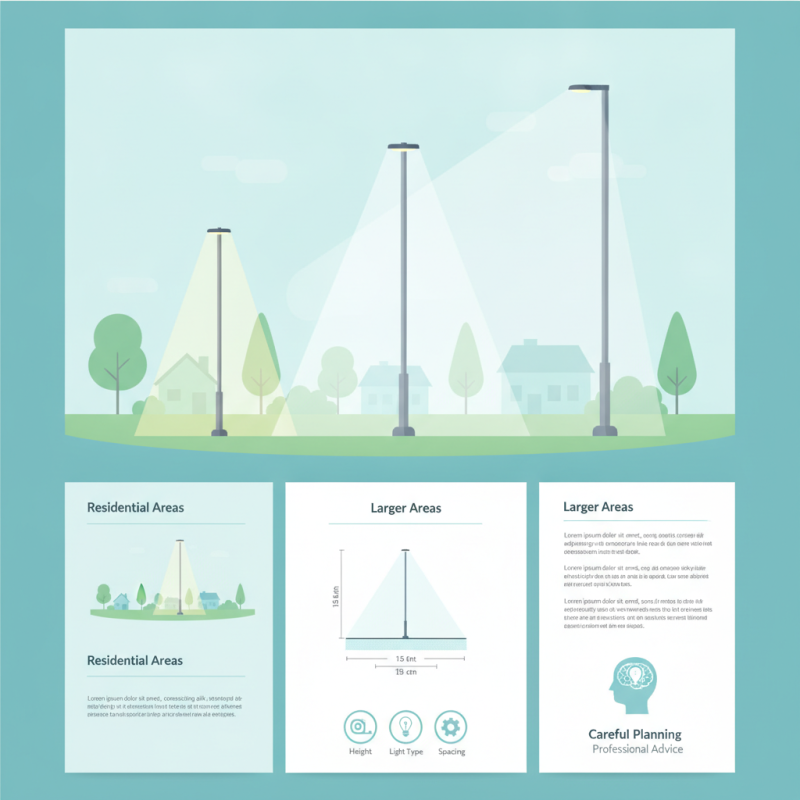
Factors Influencing Optimal Height for Outdoor Pole Lights
When it comes to outdoor pole lighting, height is crucial for optimal illumination. The right height can enhance visibility and safety. Industry standards suggest that pole lights should be installed between 12 to 20 feet high. This range can affect the even distribution of light across the area. If the poles are too low, the light may become harsh and ineffective. Conversely, if they are too high, the light may not adequately illuminate the desired space.
Several factors influence the ideal height for outdoor pole lights. The area being illuminated plays a significant role. For parking lots or open fields, a height of 16 to 20 feet is often recommended. According to the Illuminating Engineering Society (IES), lights at these heights cover a larger area effectively. However, in smaller residential settings, 12 to 14 feet is generally sufficient. The type of light fixture also matters. LED fixtures, for instance, can provide brighter illumination at lower heights compared to traditional bulbs.
Consideration of local regulations is essential as well. Some municipalities have specific guidelines on the height of outdoor lighting to minimize light pollution. These regulations can vary widely. Understanding these factors helps create a balance between effective lighting and community standards. Reflection on these details ensures that outdoor lighting installations serve their purpose without disrupting the surroundings.
How High Should Outdoor Pole Lights Be for Best Illumination? - Factors Influencing Optimal Height for Outdoor Pole Lights
| Height (Feet) |
Illumination (Lux) |
Recommended Area Coverage (Square Feet) |
Best Use Cases |
| 10 |
50 |
200 |
Pathways, Small Gardens |
| 12 |
70 |
300 |
Residential Driveways |
| 14 |
90 |
400 |
Parks, Large Gardens |
| 16 |
110 |
500 |
Commercial Parking Lots |
| 18 |
130 |
600 |
Sporting Areas, Wide Pathways |
Recommended Height Range for Effective Illumination
When it comes to outdoor pole lights, height plays a crucial role in effective illumination. The recommended height range for most outdoor pole lights is between 10 to 20 feet. This range provides ample light coverage while minimizing glare. Properly positioning the lights helps prevent dark spots and shadows, enhancing safety and visibility.
Consider the space where you are installing the lights. If it’s an open area, taller poles can disperse light over a larger area. Conversely, shorter poles work well in more confined spaces or residential settings. The light distribution tends to decrease significantly if the poles are too low.
Here are some tips to achieve optimal lighting. First, evaluate the ground surface. Textured or uneven surfaces may require higher lights to ensure even illumination. Also, think about the surrounding structures and trees; these can obstruct light. Lastly, experiment with the placement and height before making a permanent installation. Adjust as needed to achieve the best results.
The Role of Light Spacing in Outdoor Pole Light Placement
When planning outdoor pole lighting, light spacing plays a crucial role. Proper spacing enhances visibility and safety. For optimal results, poles should be placed 10 to 15 feet apart. This distance ensures that light spreads effectively. It prevents dark spots and too much overlap. Think about the layout of the area. A parking lot, for example, may need denser light placement.
Consider the height of the poles as well. Taller poles can illuminate a wider area. However, they also create shadows in certain spots. Balancing height and spacing is essential. A lower pole might provide more concentrated light, but at a smaller radius. Test different configurations. Measure the illumination at various points. Take notes on areas that feel too dim or excessively bright.
Remember, every space is unique. Environmental factors like trees, buildings, or fences can affect light distribution. Adjustments may be necessary to achieve the desired effect. It’s not just about following guidelines; it's about practical evaluation. Gathering feedback from users can highlight potential improvements as well. Ultimately, the goal is to create a well-lit, inviting environment that enhances safety and accessibility.
Types of Outdoor Environments and Their Height Requirements
When it comes to outdoor pole lights, the environment significantly influences the ideal height for installation. In residential areas, lights should typically be around 10 to 12 feet high. This height provides sufficient illumination for walkways and driveways while minimizing glare for nearby homes. On the other hand, parks and recreational areas may require lights positioned higher, often between 12 and 15 feet. This ensures that the light spreads across larger areas, enhancing safety and visibility.
Commercial spaces have their own height requirements. For instance, parking lots often benefit from pole lights that reach 15 to 20 feet in the air. These lights can illuminate vast areas, reducing dark spots that may create safety concerns. Additionally, athletic fields often use even taller poles, around 20 to 30 feet high. This height allows for bright light coverage during evening games.
Reflecting on these guidelines, it's clear that height is just one part of the equation. The placement and angle of the lights also matter. A well-positioned pole light can enhance security and visibility. Yet, improper installation height can lead to shadows and under-lit areas. It’s crucial to consider the specific needs of each environment to achieve effective illumination.
How High Should Outdoor Pole Lights Be for Best Illumination?
This bar chart illustrates the recommended heights for outdoor pole lights in various environments to achieve optimal illumination. The heights are measured in feet, reflecting different requirements for residential areas, commercial spaces, parks, parking lots, and roads.
Adjusting Height for Different Purposes: Safety, Aesthetics, and Function
When it comes to outdoor pole lights, the height is crucial for safety. If lights are positioned too low, they may create shadows. This can lead to accidents, especially in areas with pedestrian traffic. Ideally, the height should be between 8 to 14 feet, ensuring ample visibility. It’s essential to consider the terrain; uneven ground may require adjustments. Lights should provide a clear view without obstructing sightlines.
Aesthetics play a significant role in how lighting impacts outdoor spaces. Higher lights can cast a broader beam, enhancing architectural features or landscapes. However, not all settings benefit from uniform lighting. Sometimes, lower lights create intimate or cozy atmospheres. It’s essential to evaluate the space and adjust accordingly.
Functionality is another critical aspect. Brightness levels and coverage areas should align with the specific use. For instance, residential areas might prioritize softer lighting, while commercial zones require bright, focused beams. Balancing these elements ensures the lights serve their purpose effectively. Reflecting on your choices can enhance both safety and beauty of your outdoor space.
FAQS
: Poles should be placed 10 to 15 feet apart for effective light spread.
It enhances visibility and safety while reducing dark spots.
Taller poles illuminate wider areas but may create unwanted shadows.
Test configurations and measure light levels. Adjust positions as needed.
Yes, trees and buildings can affect how light is spread in an area.
A height between 8 to 14 feet is ideal for safety and visibility.
Higher lights highlight features, while lower lights create a cozy atmosphere.
Brightness and coverage depend on the area type, impacting safety and function.
User feedback can reveal areas needing adjustment for better lighting effects.
Many forget to consider terrain variation, which may require adjustments.
Conclusion
When considering how high should outdoor pole lights be mounted, several factors come into play to ensure optimal illumination. Key elements include the type of environment—whether residential, commercial, or recreational—as well as the specific purposes of the lighting, such as safety, aesthetics, or functionality. Recommended height ranges can vary, but generally, a height of 8 to 14 feet is suggested for effective coverage.
Moreover, the spacing between lights significantly influences their effectiveness in providing adequate illumination. Different outdoor settings may require adjustments in height to achieve the desired ambiance and visual clarity. Ultimately, the combination of height, spacing, and environmental context plays a crucial role in maximizing the benefits of outdoor pole lighting.

 Merak Lighting